
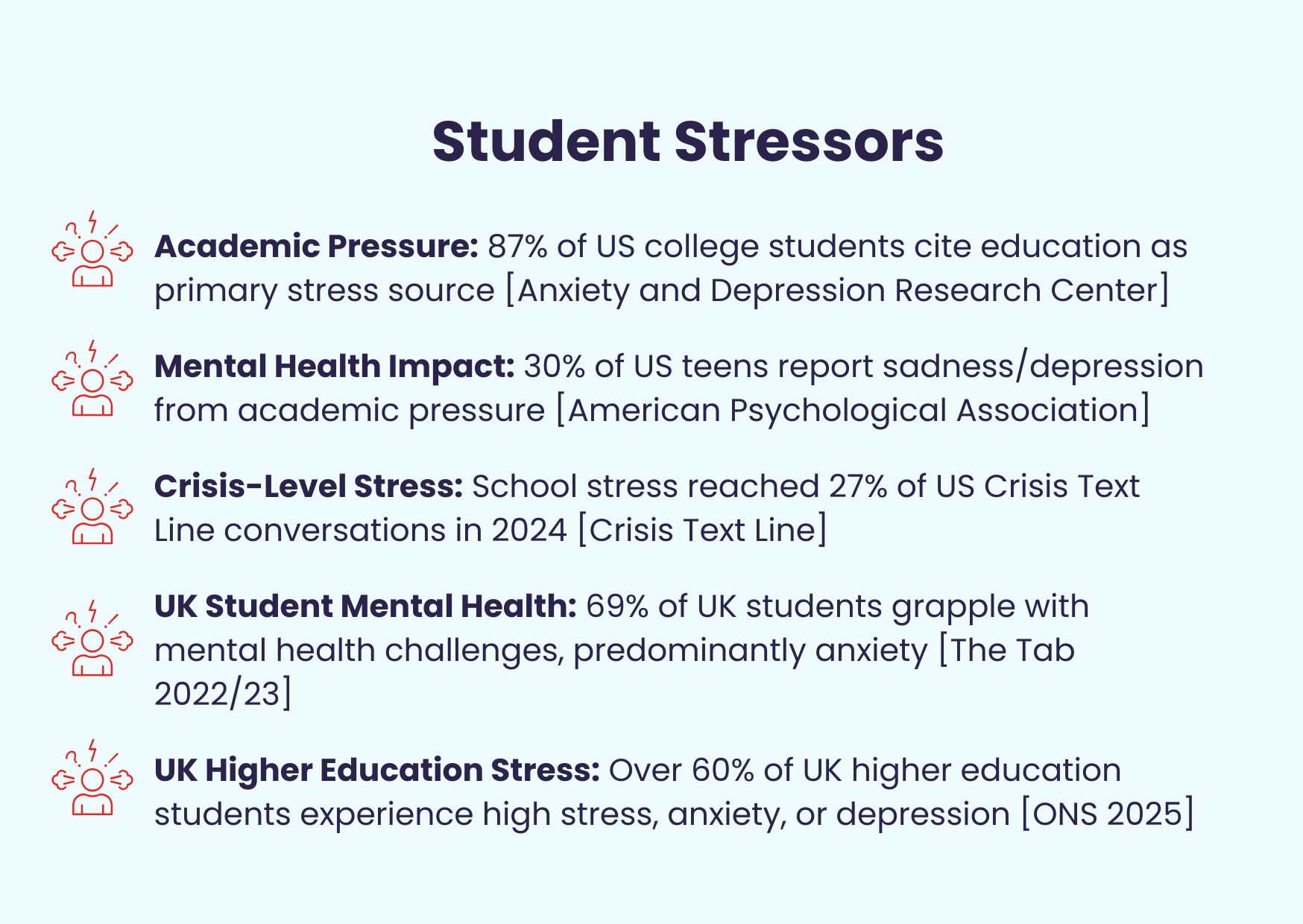
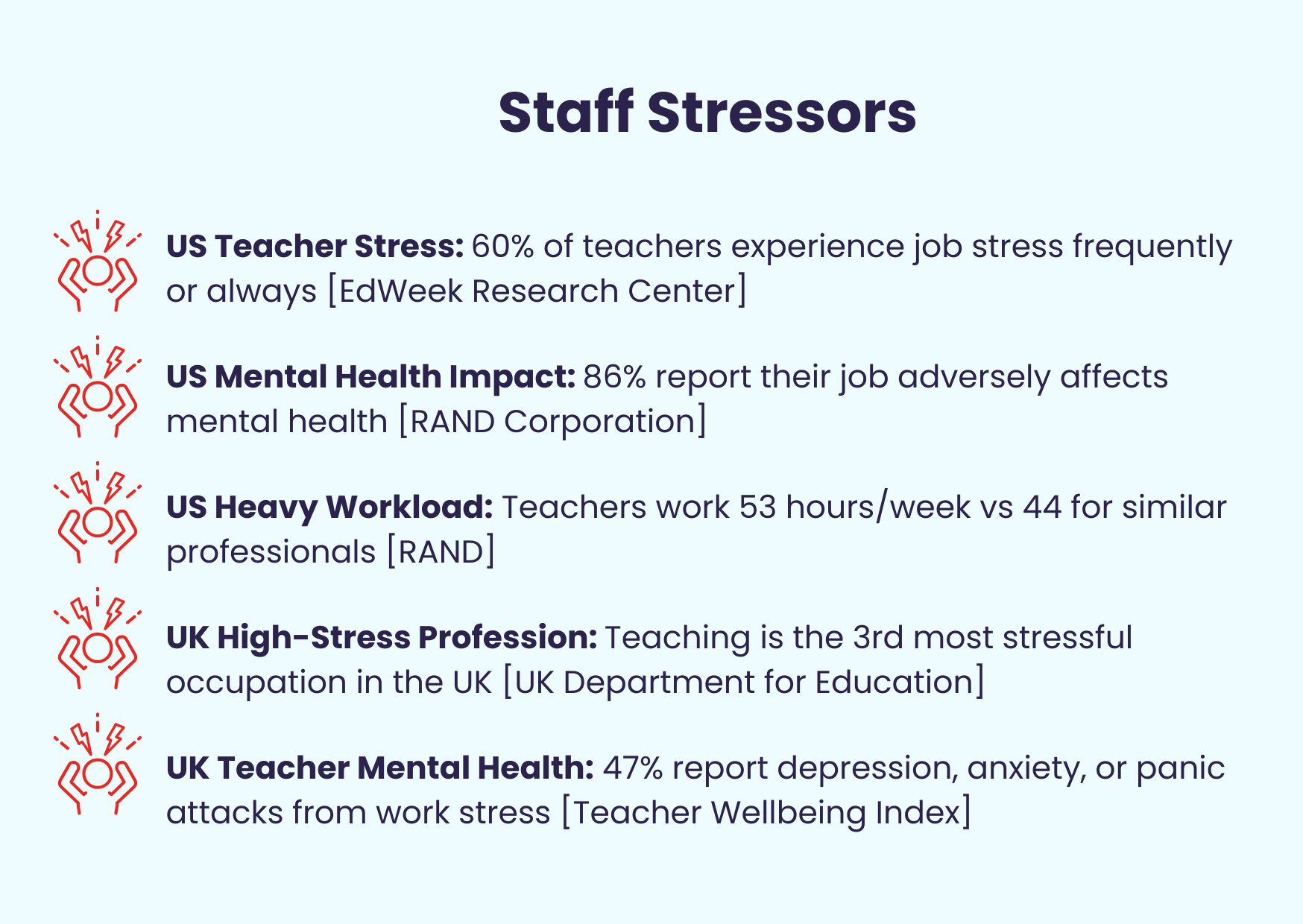
Here's the September paradox: while parents breathe a sigh of relief that routine is returning, teachers and students are getting ready to hold their breath. Behind the fresh uniforms and sharpened pencils lies a fascinating contradiction. Teaching consistently ranks among the UK's most stressful professions, with recent studies placing the education sector alongside police officers and social workers as having high levels of work-related stress. Meanwhile, 39% of students have considered leaving their course because of mental health struggles [Randstad UK's Student Mental Health Report 2023] and only 12% believe their institution handles mental health well. [CALM Zone report 2024]
The result? Our classrooms have become pressure cookers of anxiety and expectation. But here's where it gets interesting: while these statistics might seem daunting, neuroscience has handed us something remarkably simple, breathing techniques that can literally shift our nervous system from chaos to calm in under five minutes. The solution isn't complex restructuring or expensive interventions. The answer is right under our nose.
What Research Reveals: The Top Stressors
Five Transformative Breathing Exercises:
Research-backed techniques that reduce stress and improve focus in under 5 minutes
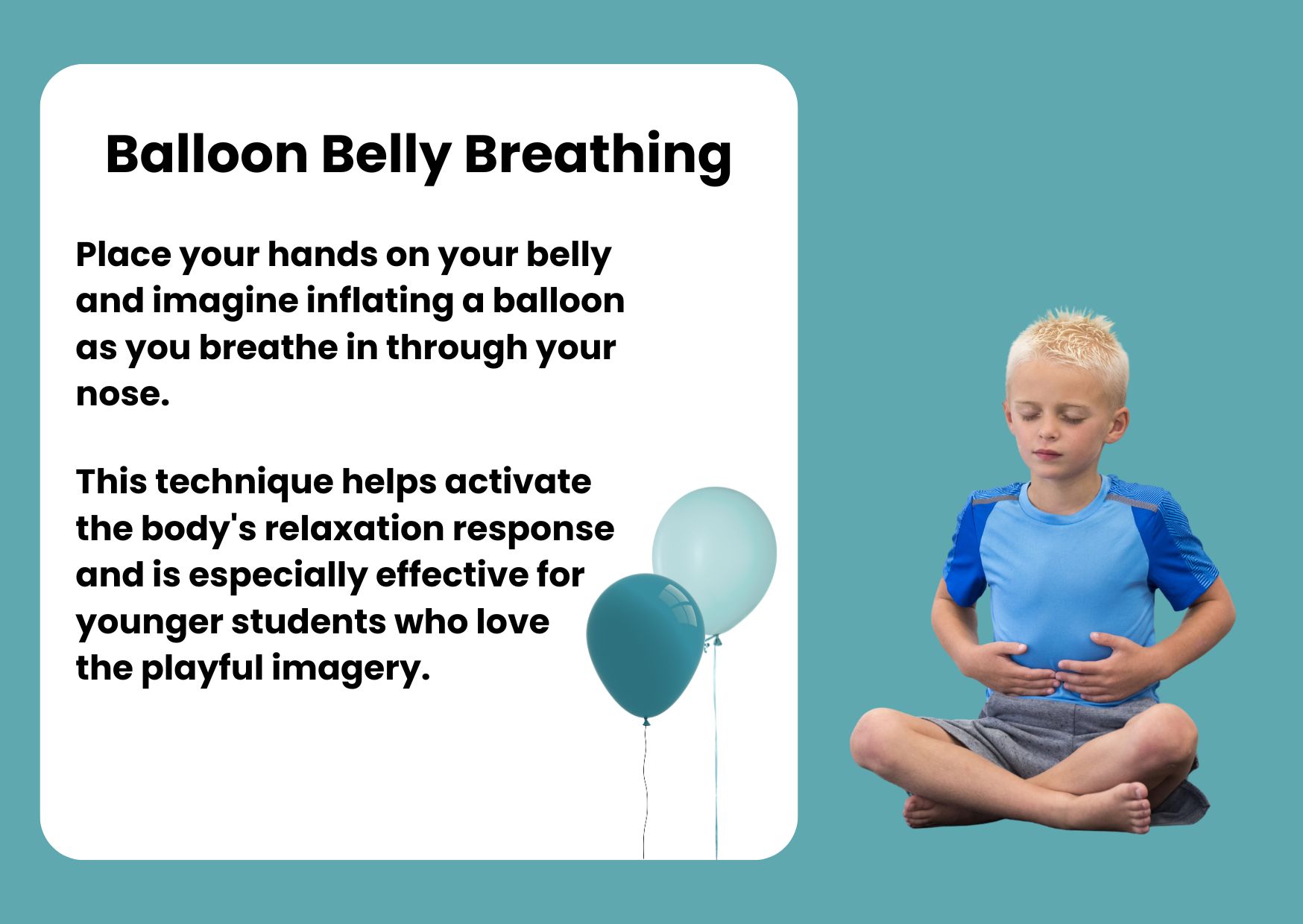
1. Balloon Breathing: This playful technique transforms deep breathing into a fun visualisation that children instantly connect with. Start by taking 3-5 slow rounds, focusing on making your "balloon" a little bigger with each nasal breath. Build up to a 2 minute daily practice.
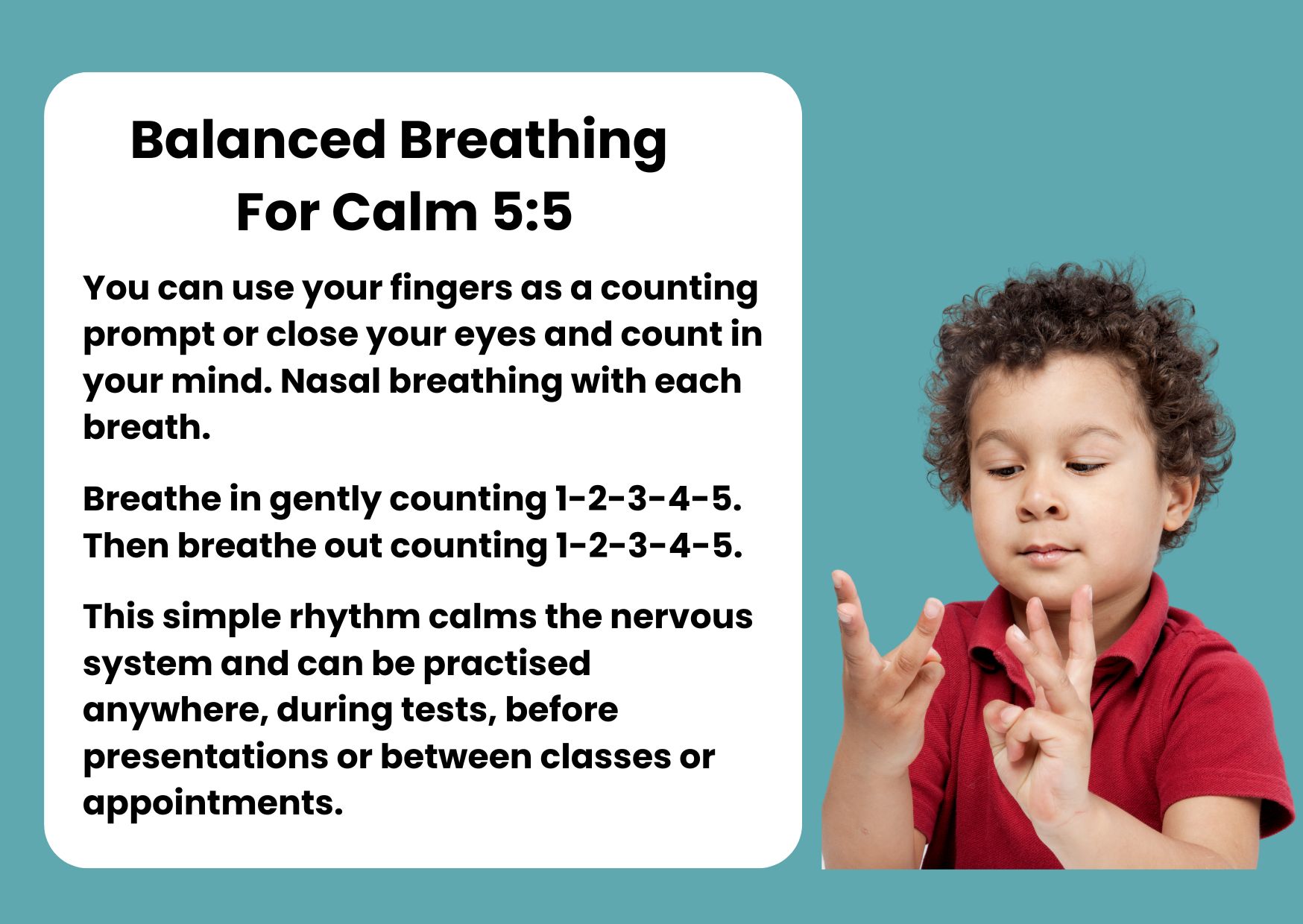
2. Five Count Breath: This simple rhythm-based technique works for all ages and lung capacities. If counting to 5 feels too long, try 3 or 4 instead. The key is keeping your inhale and exhale counts balanced. Great for adults and children - the shorter breath count makes it perfect for smaller, younger lungs to enjoy too.
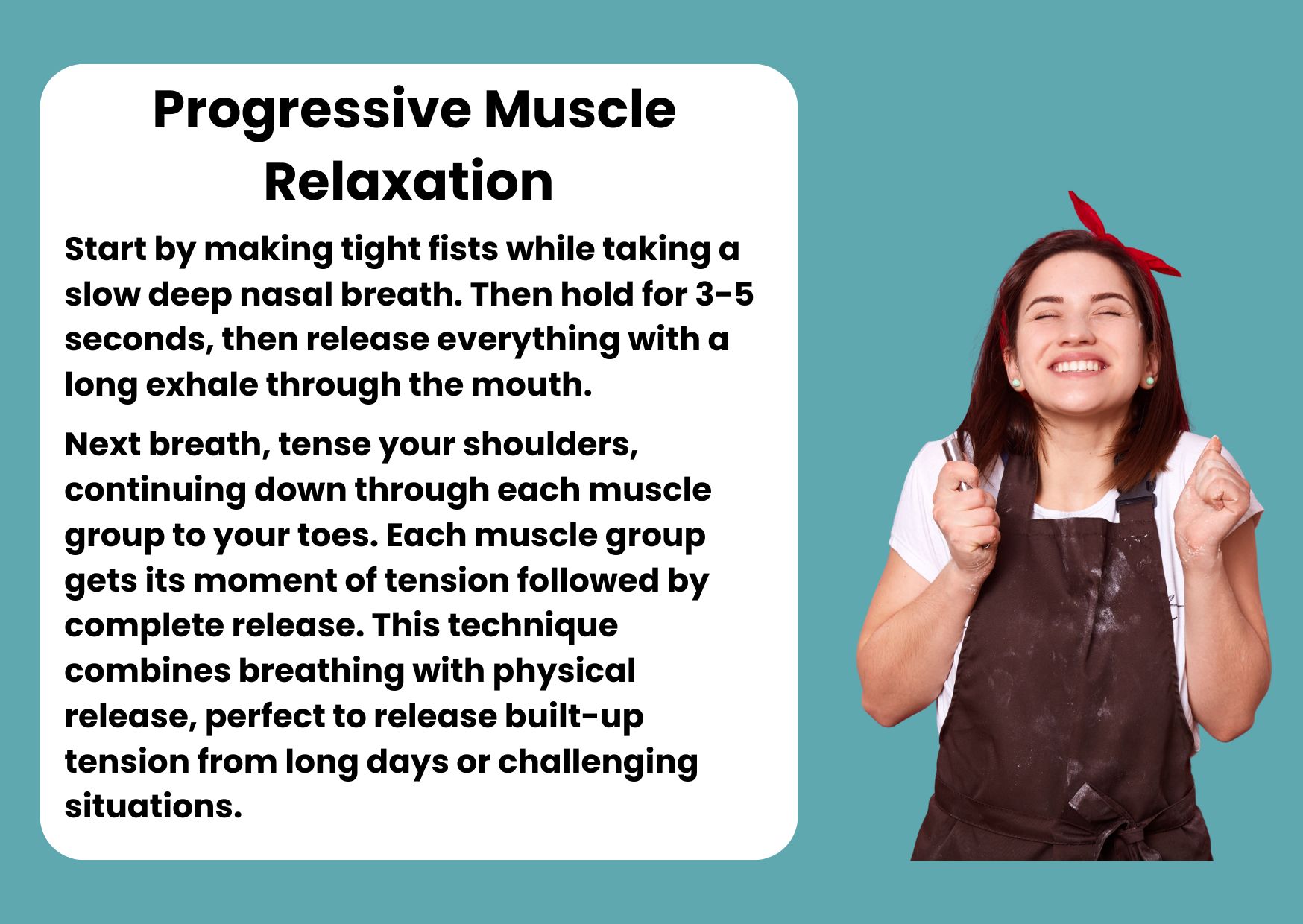
3. Progressive Muscle Relaxation With The Breath: Since normal breathing naturally involves muscle contraction on the in-breath and relaxation on the out-breath, you can work with your body's rhythm by intentionally releasing tension as you exhale. This powerful technique combines breathing with physical tension contraction and release, making it ideal when stress has built up in the body. Work systematically through each muscle group, starting with the face and fists and then working down through the thighs and toes. Great for adults and children.
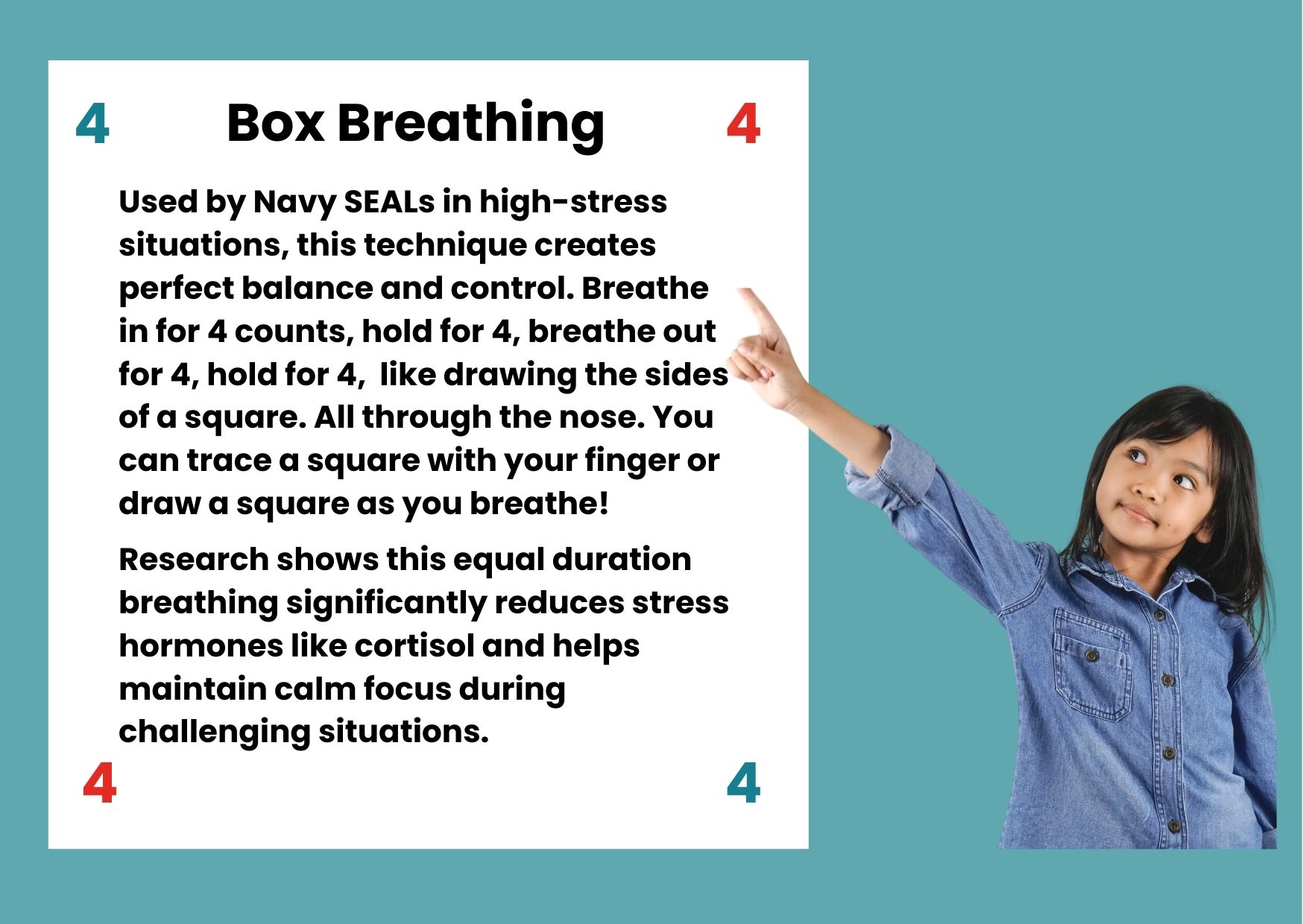
4. Box Breathe For Calm + Focus: Used by Navy SEALs in high-stress situations, this technique creates perfect balance and control. Breathe in for 4 counts, hold for 4, breathe out for 4, hold for 4 - like drawing the sides of a square. If you are an adult and enjoy this breath exercise, you can try extending the count ratio to 5:5:5:5 as your practice progresses.
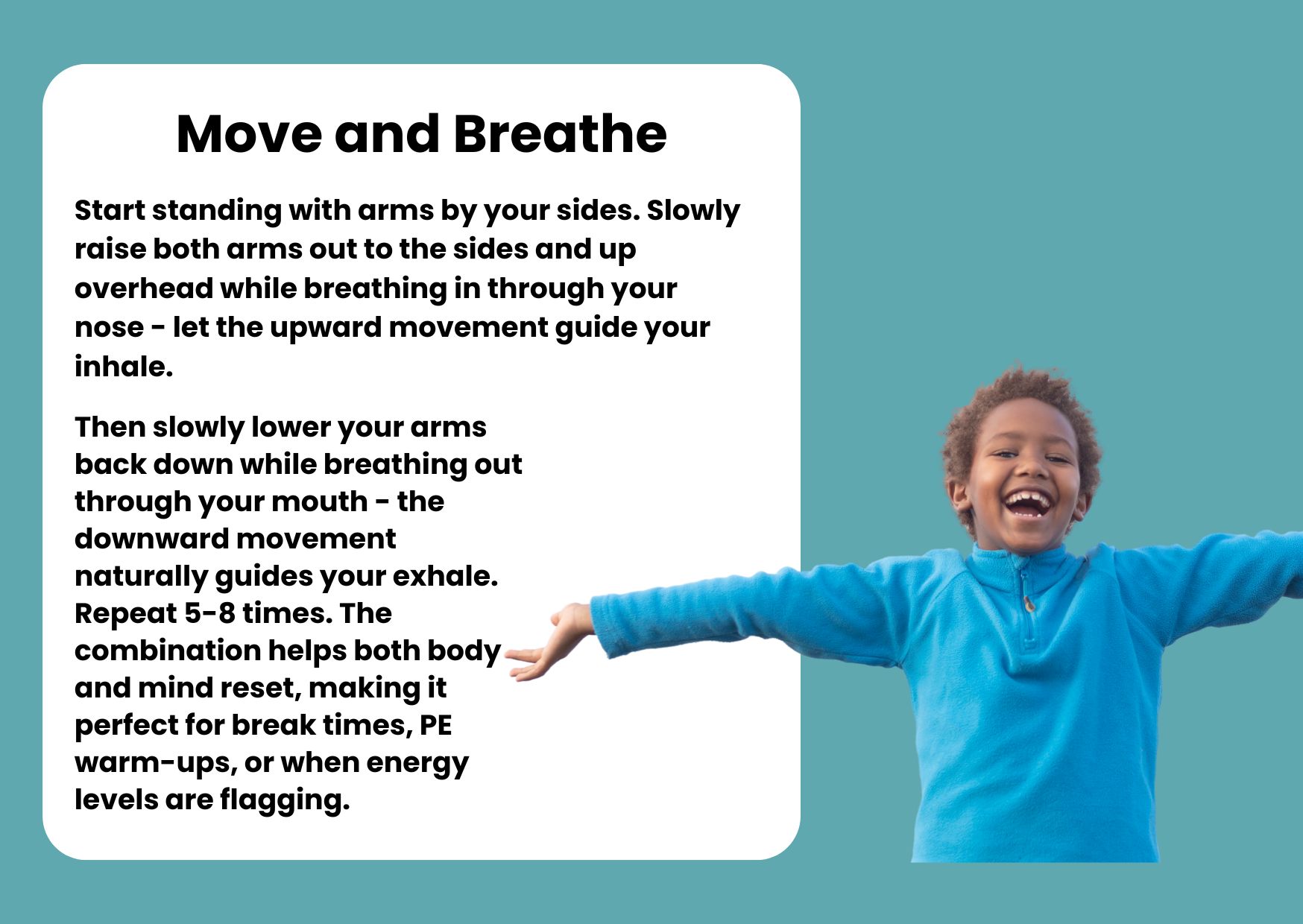
5. Movement + Breath: After sitting in classrooms for hours, students need movement to release physical tension and re-energise their minds. Gentle movement activates different muscle groups while breathing helps regulate the nervous system. Try arm circles, gentle stretches, or walking while practising deep breathing.
Making It Work: Implementation Tips
- Start Small: Begin with just 2-3 minutes daily breathwork practice. Research shows even a brief practice create significant stress reduction.
- Build Routine: Incorporate breathing breaks into natural transition times, after lunch, before tests or at the start of challenging subjects.
- Lead by Example: When staff model these techniques, students are more likely to embrace them. Create a whole-school culture of calm.
- Track Progress: Notice changes in your classroom/teaching or professional setting and student/client behaviour. Simple before-and-after check-ins like "How stressed do you feel on a scale of 1-5?" can help you and your students see the difference these techniques make.
Join our Breath Coach Training on 3rd September 2025 or sign up to the Fundamentals Healthy Breathing CPD Accredited Course today!

Responses